


DJI Mic Mini 2S (2 TX + 1 RX + Charging Case)
DJI Mic Mini 2S is an ultra-compact wireless microphone system featuring 32-bit float internal recording, two-level AI noise canceling, and up to 40 hours of battery life with the charging case. With support for up to four transmitters, a transmission range of up to 400 meters, and broad compatibility with cameras, smartphones, computers, and DJI OsmoAudio devices, it is an ideal choice for vlogging, interviews, podcasts, and livestreaming.
Product prices displayed on the website do not include VAT. VAT will be applied at the rate prescribed by the State at the applicable time.
Shipping fees (if any) are calculated based on the destination, weight and order value, and will be displayed at checkout before the customer confirms the order.
Select Version
DJI Mic Mini 2S (2 TX + 1 RX + Charging Case)

DJI Mic Mini 2S (1 TX + 1 RX)

DJI Mic Mini 2S (1 TX + 1 Mobile RX + Charging Case)

DJI Mic Mini 2S (2 TX + 1 RX + Charging Case) + DJI Mic Series Mobile Receiver
DJI Mic Mini 2S – Capture Every Detail, Protect Every Moment
When filming a vlog, interview, podcast, or outdoor production, a visual scene can often be reshot. A natural response, an unexpected reaction, or a once-in-a-lifetime statement, however, may never happen in exactly the same way again. DJI Mic Mini 2S is designed to protect those irreplaceable moments.
Weighing approximately 12 grams, DJI Mic Mini 2S combines 32-bit float internal recording, approximately 14.5 GB of built-in storage, two-level AI noise canceling, and support for connecting up to four transmitters to one receiver. It brings the capabilities of a professional wireless audio system into an exceptionally compact, flexible, and easy-to-use design.
32-Bit Float Internal Recording – Reliable Audio in Unpredictable Situations
One of the most important upgrades of DJI Mic Mini 2S is its ability to record 32-bit float audio directly inside the transmitter.
This format captures an extremely wide dynamic range, reducing the need to constantly monitor and adjust gain during production. When volume levels change suddenly—for example, when a speaker laughs loudly, raises their voice, moves closer to the microphone, or enters a noisy environment—the 32-bit float recording provides greater flexibility during post-production.
Quiet sections can be amplified, while loud sections can be adjusted more effectively without losing essential detail. This makes the recording significantly easier to recover when levels were not perfectly controlled during filming.
The 32-bit float function is disabled by default and can be enabled through the DJI Mimo app. Although the final result still depends on the microphone’s physical limits and the recording environment, it provides an important layer of protection for scenes that cannot be repeated.
Original and Processed Recording Options – Flexible for Different Workflows
DJI Mic Mini 2S allows creators to save internal recordings in two different formats.
Original File preserves the unprocessed audio signal. It is ideal for professional creators who prefer to handle noise reduction, equalization, voice tone, and loudness adjustments in dedicated post-production software.
Edited File applies DJI’s processing algorithms according to the selected noise canceling, low-cut, voice tone, and adaptive gain settings. This is the default option and provides an audio file that can be used quickly with minimal editing.
This dual-file approach makes DJI Mic Mini 2S suitable for both beginners seeking convenience and professionals requiring complete control over their audio.
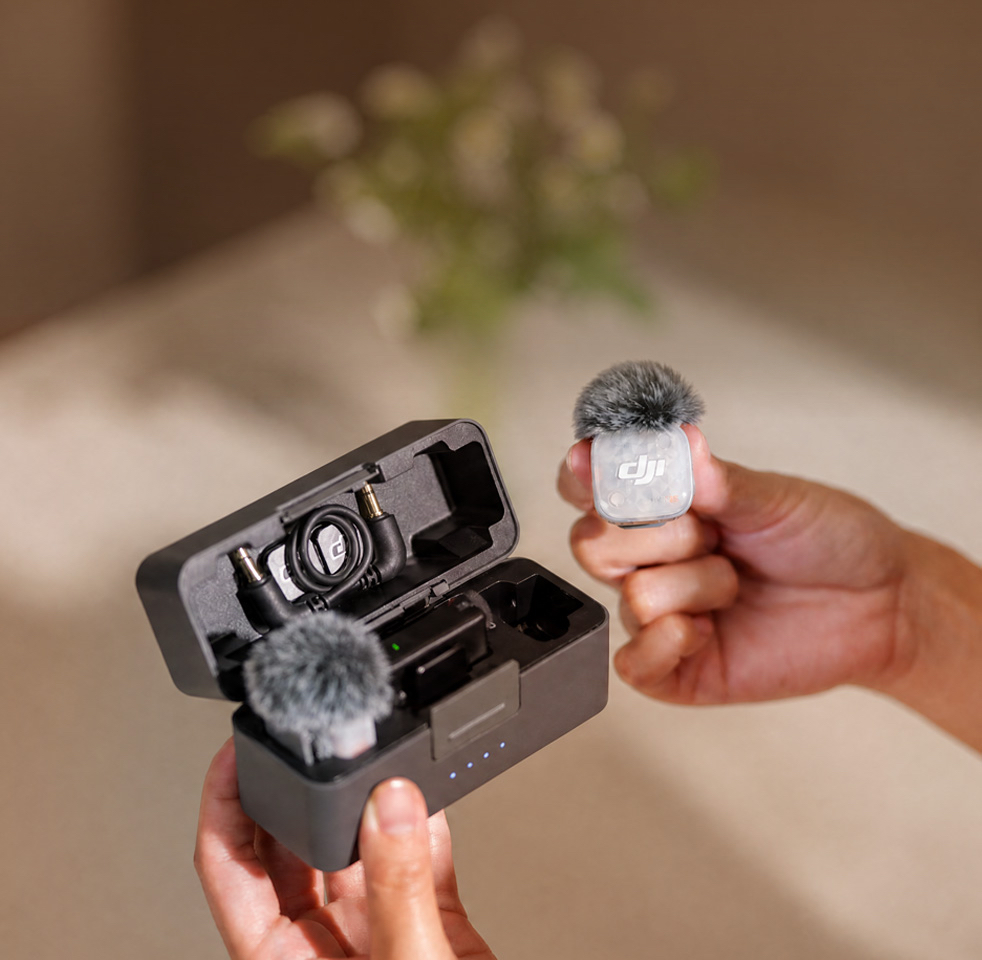
Approximately 14.5 GB of Storage – Up to 28 Hours of Internal Recording
Each DJI Mic Mini 2S transmitter includes approximately 14.5 GB of built-in storage.
In the standard 24-bit recording mode, the transmitter can store up to approximately 28 hours of audio. When 32-bit float recording is enabled, the available recording time is approximately 22 hours.
Loop recording allows the device to continue operating during long production sessions without requiring users to constantly delete files. More importantly, internal recording creates a backup in case the wireless signal is interrupted, the subject moves out of range, or the receiver experiences a problem.
The transmitter can also automatically activate internal recording when the receiver battery becomes critically low, helping protect the content currently being captured.
DJI Mic Mini 2S does not support external memory cards.
A Standalone Voice Recorder in Your Pocket
The DJI Mic Mini 2S transmitter can also function independently as a compact voice recorder.
Users can clip it to their clothing to record interviews, lectures, meetings, voice notes, narration, or creative ideas without connecting it to a receiver or camera.
By combining a wireless microphone and a standalone recorder in one device, DJI Mic Mini 2S reduces the amount of equipment creators need to carry. It is especially useful for journalists, teachers, students, interviewers, and content creators who frequently work outside a studio.
High-Speed File Transfer at Up to 34 MB/s
After recording, users can connect the DJI Mic Mini 2S Charging Case directly to a compatible computer or smartphone to transfer the internal audio files.
Transfer speeds can reach approximately 34 MB/s, significantly reducing waiting time when working with long interviews, podcasts, lectures, or event recordings.
Instead of connecting each transmitter individually, creators can place the devices inside the charging case and manage their recordings from one central location. This creates a faster and more organized post-production workflow.
Two-Level AI Noise Canceling – Clearer Vocals in Different Environments
DJI Mic Mini 2S uses DJI’s proprietary AI noise-canceling model to identify and suppress environmental noise while maintaining vocal clarity, transparency, and detail.
Users can select between two noise-canceling levels through the DJI Mimo app.
Basic – Natural Sound in Quiet Indoor Spaces
Basic mode is suitable for offices, classrooms, home studios, and other relatively quiet indoor environments.
It helps reduce noises from fans, air-conditioning systems, background hum, and room reverberation while preserving a natural vocal character.
Strong – Enhanced Vocal Clarity in Noisy Environments
Strong mode is designed for busy streets, exhibitions, events, crowded public spaces, and outdoor environments with significant ambient noise.
The algorithm applies more intensive noise reduction so that the speaker’s voice remains clear and easy to understand.
Noise canceling is disabled by default. It can be activated through the transmitter, the DJI Mimo app, a compatible OsmoAudio device, or the dedicated control on the mobile receiver.
Windscreens for Clear Outdoor Audio
When a windscreen is attached, the transmitter can effectively reduce wind hitting the microphone capsule and suppress other unwanted environmental sounds.
This accessory is particularly useful for travel vlogging, outdoor livestreaming, walking videos, cycling content, and filming in windy locations.
DJI also offers windscreens in multiple colors, allowing creators to coordinate the microphone with their clothing, production theme, or visual branding.
Adaptive Gain Control – Consistent and Balanced Volume
DJI Mic Mini 2S features Adaptive Gain Control with two operating modes designed for different recording situations.
Clipping Control – Protection Against Sudden Volume Spikes
Clipping Control automatically attenuates unexpected peaks in volume.
This function is useful at racetracks, concerts, sporting events, performances, and other environments where sound levels can change rapidly.
Loudness Balance – Stable Vocal Levels
Loudness Balance dynamically adjusts gain to reduce volume differences when a speaker turns their head, moves around, or changes their distance from the microphone.
It is particularly useful for interviews, livestreams, presentations, tutorials, and podcasts.
Adaptive Gain Control is disabled by default and can be configured through the DJI Mimo app.
Three Voice Tone Presets – Match the Sound to Your Content
Different types of content require different vocal characteristics. DJI Mic Mini 2S offers three voice tone presets that allow creators to quickly adjust the overall sound.
Regular is the default setting. It delivers clean, natural, and balanced vocals, making it suitable for vlogs, interviews, tutorials, and most everyday recording situations.
Rich emphasizes lower frequencies, giving the voice a warmer, fuller, and more powerful character. It is particularly effective for podcasts, narration, product reviews, and naturally thinner voices.
Bright enhances higher frequencies, increasing vocal definition and presence. It works well for deeper voices, dialogue-heavy content, and environments with strong low-frequency background sound.
Voice tone settings can be selected in DJI Mimo. When internal recording is configured as an Original File, the selected tone is not permanently applied to the original recording, although it may still affect the audio signal transmitted to the receiver.
Approximately 12 Grams – Lightweight and Discreet
The DJI Mic Mini 2S transmitter measures approximately 28.58 × 28.04 × 13.52 mm and weighs around 12 grams with the magnetic front cover installed, excluding the clip and clothing magnet.
Its lightweight design prevents the microphone from pulling down collars or becoming uncomfortable during long recording sessions. Its compact size also helps it remain discreet and less distracting on camera.
The transmitter can be attached using either the clip or the magnetic mounting system.
The detachable clip can rotate through a full range of positions, allowing the transmitter to be mounted horizontally, vertically, or upside down. This provides greater flexibility when adjusting the microphone for optimal sound pickup and visual presentation.
Multi-Color Magnetic Front Covers – Personalize Your Microphone
In addition to the standard Obsidian Black and Glaze White options available in selected packages, DJI offers magnetic front covers in a wide range of colors.
Eight optional colors allow the transmitter to blend into clothing, coordinate with a brand identity, or become a deliberate visual element within the shot.
The magnetic design makes it easy to change the cover without tools or complicated installation.
DJI has also collaborated with internationally recognized illustrator Victo Ngai to create the Time Series Magnetic Front Covers. The four artistic designs allow creators to turn the microphone into a more expressive part of their on-camera identity.
Redesigned Charging Case – A Pocket-Sized Audio Studio
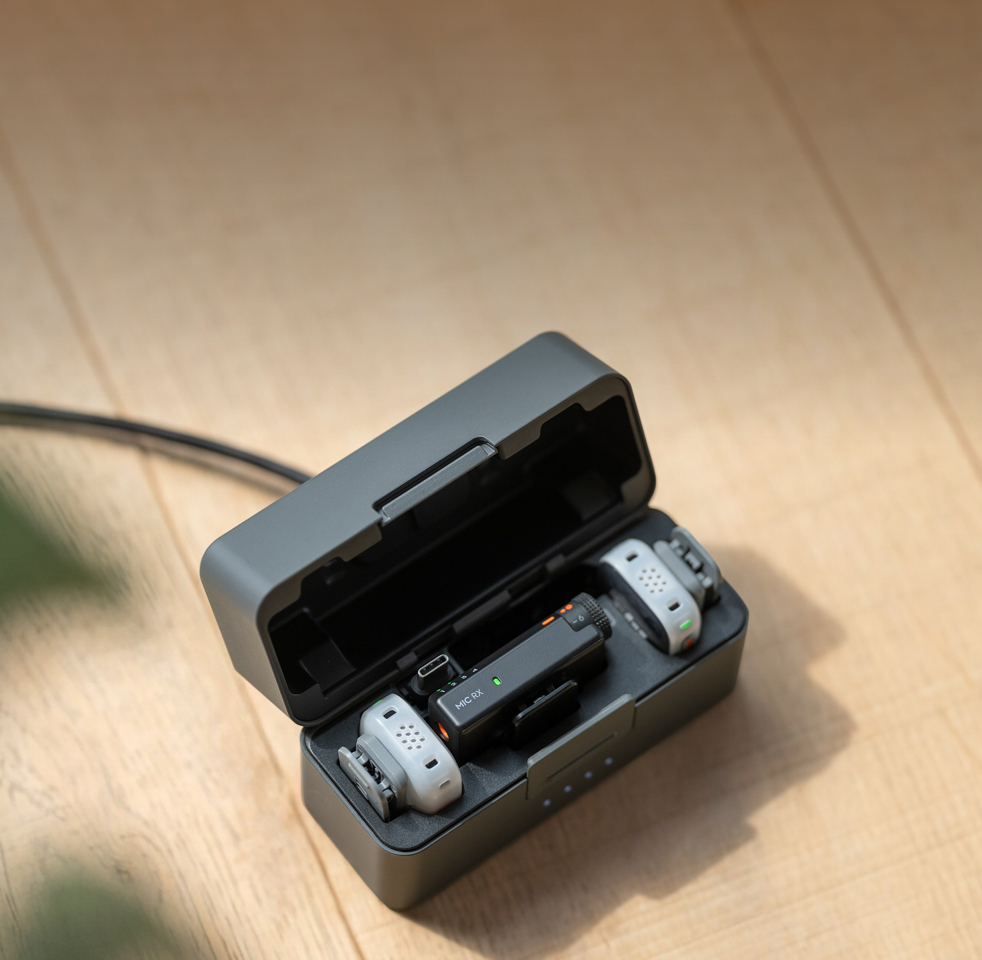
The DJI Mic Mini 2S Charging Case does more than recharge the equipment. It also functions as a centralized storage and management solution.
The case can hold two transmitters, one DJI Mic Mini 2S Receiver, one DJI Mic Series Mobile Receiver, and essential accessories such as magnetic clips, clothing magnets, windscreens, a 3.5 mm TRS audio cable, and mobile phone adapters.
The Mobile Receiver is not included in every package and may need to be purchased separately.
When fully charged, the charging case can recharge one receiver and two transmitters approximately 3.2 times. It also supports device pairing and internal file transfer when connected to a computer or compatible smartphone.
DJI additionally offers a smaller charging case for a one-transmitter and one-mobile-receiver configuration. This version prioritizes portability but does not support file transfer.
Connect Up to Four Transmitters to One Receiver
A single DJI Mic Mini 2S Receiver can connect to as many as four transmitters simultaneously.
This makes the system suitable for multi-person podcasts, panel discussions, group interviews, classroom recordings, commercial productions, and other projects requiring multiple independent audio sources.
Users can expand the system with additional DJI Mic Mini 2S transmitters or use compatible DJI Mic Mini and DJI Mic Mini 2 transmitters after installing the required firmware updates.
Cross-generation compatibility applies within the compatible Mic Mini product family. DJI Mic Mini 2S does not offer the same standard cross-generation connection with DJI Mic, DJI Mic 2, or DJI Mic 3 transmitters and receivers.

Mono, Stereo, and Quadraphonic Recording Modes
DJI Mic Mini 2S supports three channel-routing modes for different recording and post-production requirements.
Mono combines audio sources into one channel, creating a simple file that is easy to use immediately.
Stereo separates sound between the left and right channels. This is convenient for two-person interviews or projects where each speaker needs to be adjusted separately.
Quadraphonic supports up to four independent audio sources, providing greater control for multi-person productions and professional editing workflows.
Creators can also enable a Safety Track through the DJI Mimo app. This creates a backup track recorded at 6 dB lower than the main track, reducing the risk of distortion or clipping when the sound level rises unexpectedly.
Independent Four-Channel Output – More Control in Post-Production
With compatible equipment and software, DJI Mic Mini 2S can output four independent audio channels.
Each speaker can be recorded to a separate track, allowing editors to individually adjust volume, equalization, noise reduction, timing, and other parameters.
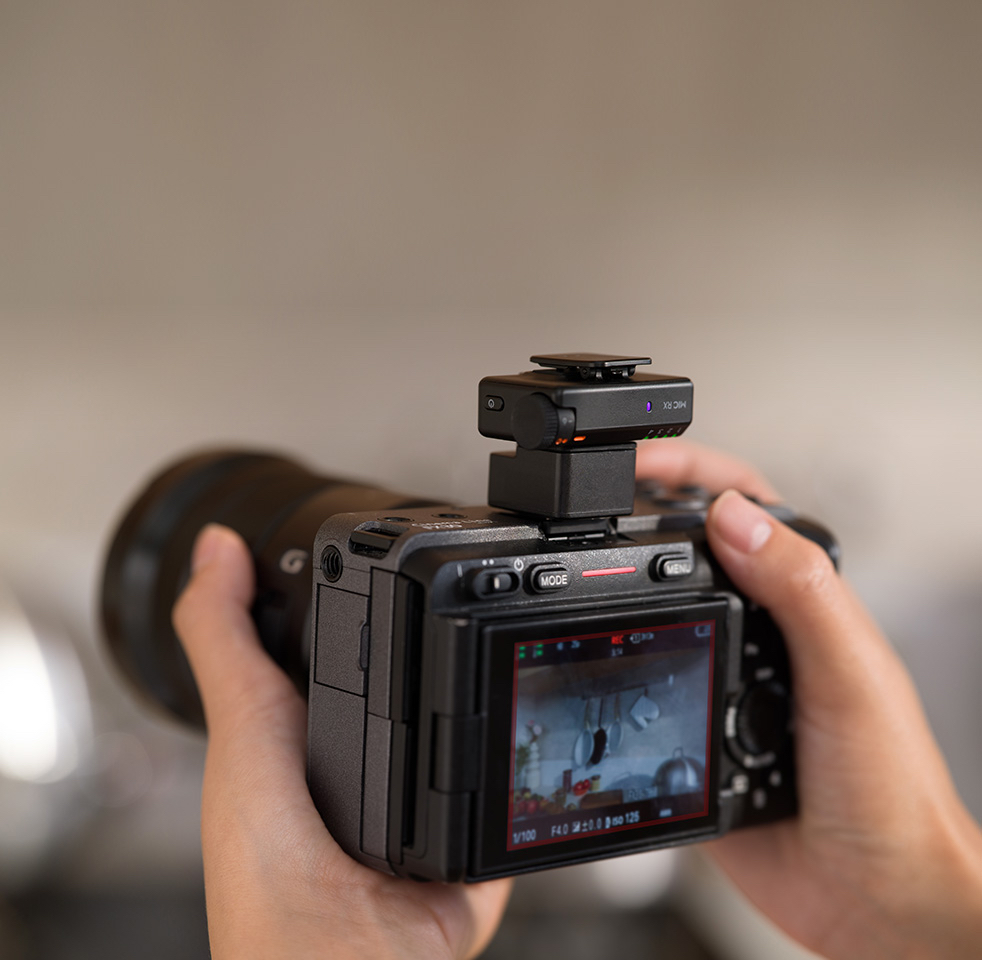
Four-channel output is available with selected Sony cameras through the separately sold DJI Mic Series Camera Adapter. It can also be used with supported computer software that accepts multi-channel USB audio input.
Users should check camera, adapter, and software compatibility before building a four-channel recording system.
DJI OsmoAudio Direct Connection – Fewer Accessories, Faster Setup
DJI Mic Mini 2S supports the DJI OsmoAudio ecosystem, allowing compatible DJI devices to connect directly to the transmitter without requiring a separate receiver.
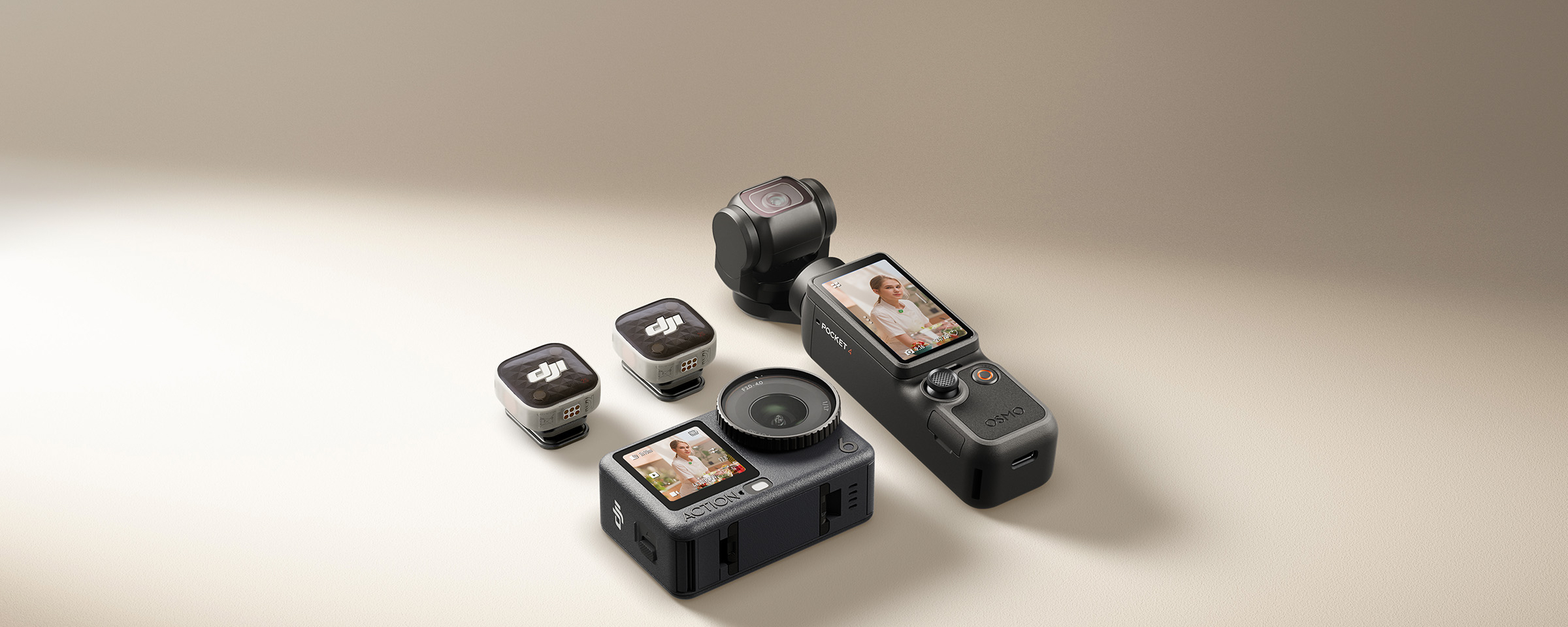
Compatible devices listed by DJI include selected models such as Osmo Pocket 4P, Osmo Action 6, Osmo Nano, and Osmo 360.
Depending on the connected device, users can connect up to two transmitters directly and record premium 48 kHz, 24-bit audio while reducing the number of cables and accessories required.
Direct connection is particularly valuable for action cameras and wearable cameras, where additional receivers and cables may make the setup heavier and more complicated.
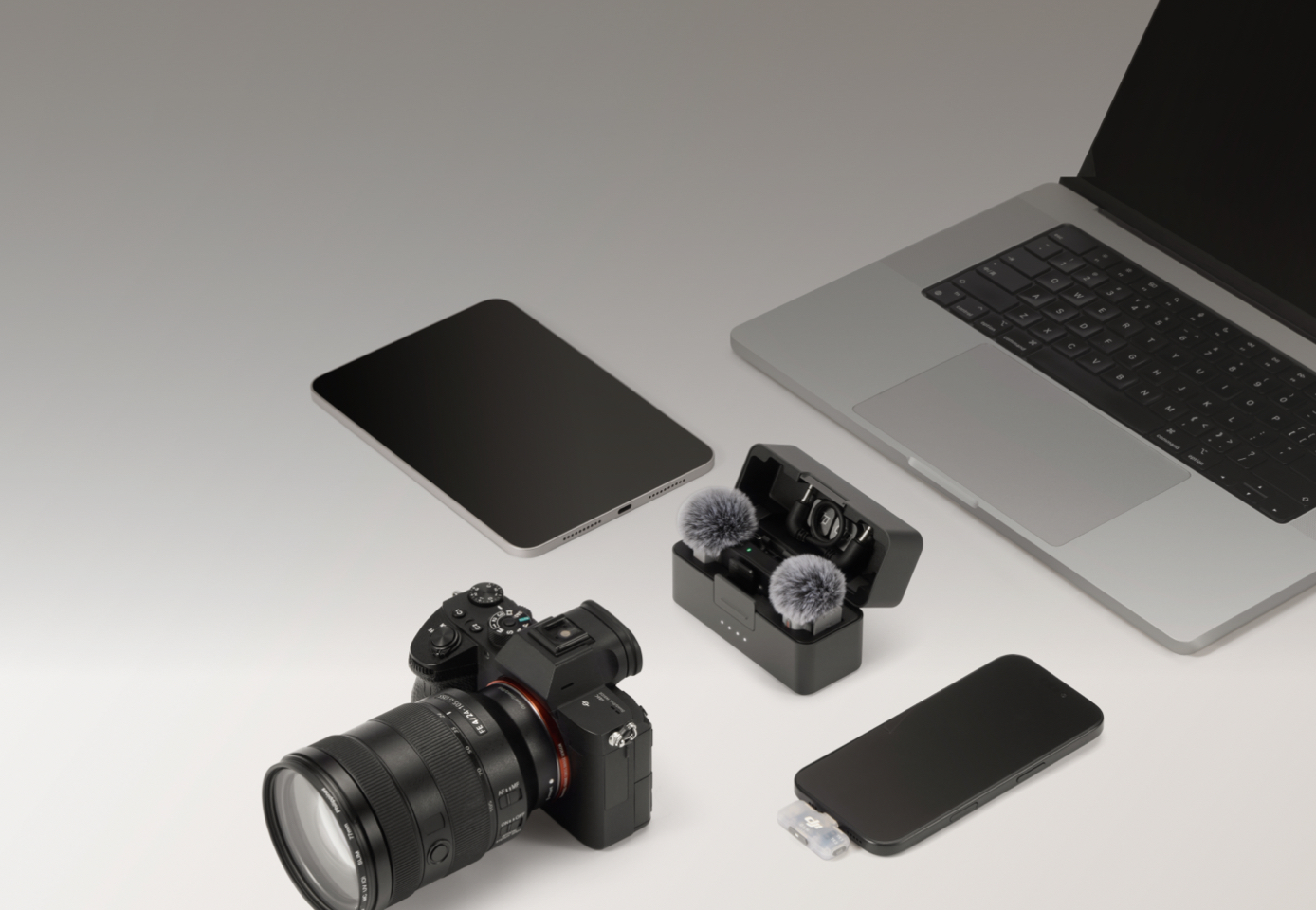
Broad Compatibility with Cameras, Smartphones, Tablets, and Computers
The DJI Mic Mini 2S Receiver includes a 3.5 mm TRS audio port for connection to a wide range of cameras.
With the appropriate adapter or receiver, the system can also be used with smartphones, tablets, and computers.
The transmitter can function as a Bluetooth microphone when connected directly to a smartphone. However, a phone can connect directly to only one transmitter at a time, and Bluetooth microphone operation may not be supported by the phone’s default camera application. A compatible third-party recording or livestreaming app may be required.
Noise canceling, voice tone, gain, power management, and firmware settings can be adjusted through DJI Mimo.
The transmitter can also retain pairing information, enabling supported devices to reconnect automatically. This makes it easier for creators to switch between a camera, smartphone, and compatible Osmo device without repeatedly configuring the entire system.
Transmission Range of Up to 400 Meters
When a DJI Mic Mini 2S Transmitter is connected to the DJI Mic Mini 2S Receiver, the maximum transmission distance can reach approximately 400 meters in an open, unobstructed, and interference-free environment.
When connected to the DJI Mic Series Mobile Receiver in the appropriate operating mode, the maximum range can reach approximately 300 meters.
In a mixed mobile receiver configuration using a compatible Mic Mini transmitter together with a DJI Mic 2 or DJI Mic 3 transmitter, the maximum stated range may be approximately 200 meters, depending on the selected connection mode.
These figures are measured under ideal test conditions and are provided for reference. Actual performance may be reduced by walls, people, Wi-Fi networks, wireless equipment, buildings, and other environmental interference.
Up to 40 Hours of Battery Life with the Charging Case
A DJI Mic Mini 2S transmitter can operate for approximately 11 hours, while the receiver can operate for approximately 10 hours under standard test conditions.
When combined with a fully charged case, the DJI Mic Mini 2S two-transmitter and one-receiver kit can provide a total operating time of up to approximately 40 hours.
The 40-hour figure is measured under controlled conditions with functions such as internal recording and noise canceling disabled, the devices operating at close range, and the receiver connected to a camera through the 3.5 mm audio cable.
Actual battery life will vary depending on the enabled features, connection method, transmission distance, environmental conditions, and recording settings.
Five Minutes of Charging for Up to One Hour of Use
Both the transmitter and receiver support fast charging.
When the battery level is low, approximately five minutes of charging can provide up to one hour of additional operating time under DJI’s test conditions.
When placed inside the charging case, each transmitter and receiver requires approximately 70 minutes to reach a full charge at room temperature.
The charging case itself requires approximately two hours to fully charge when used with a suitable power source.
Fast charging helps reduce production downtime during long shooting days and provides a useful emergency solution when the equipment was not fully charged in advance.
Intelligent Power Management
DJI Mic Mini 2S includes multiple power-saving functions designed to extend operating time during both camera and smartphone workflows.
The transmitter can automatically enter sleep mode when it no longer detects a receiver signal. It wakes and reconnects when the signal becomes available again.
When automatic power-off is enabled through DJI Mimo, the transmitter and receiver can shut down after remaining disconnected for an extended period.
When the receiver is connected to a compatible camera, it can automatically power on and off in synchronization with the camera.
When connected to a smartphone, the receiver can draw power directly from the phone. If an external power source is connected at the same time, the phone and receiver can be charged simultaneously.
Practical Accessories for a More Flexible Workflow
DJI offers a wide range of accessories for DJI Mic Mini 2S, including multi-color magnetic front covers, multi-color windscreens, the DJI Mic Series Mobile Receiver, and the DJI Mic Series Camera Adapter.
These accessories allow creators to configure the system for different situations: a lightweight smartphone setup, a four-channel studio production, direct connection to a compatible Sony camera, or a color-coordinated microphone for on-camera appearances.
Who Is DJI Mic Mini 2S Designed For?
DJI Mic Mini 2S is a compelling choice for vloggers, YouTubers, livestreamers, journalists, teachers, podcasters, interviewers, commercial production teams, and creators who need a compact wireless microphone system with room to expand.
An individual creator can begin with a one-transmitter configuration. A two-transmitter kit is suitable for interviews and two-person content. As production requirements grow, the system can be expanded to support as many as four transmitters without replacing the entire audio setup.
DJI Mic Mini 2S – Compact Without Compromising Confidence
The greatest strength of DJI Mic Mini 2S is not simply its small size or long wireless range. Its real value lies in the multiple layers of protection it provides for important audio.
Stable wireless transmission, large-capacity internal storage, 32-bit float recording, a Safety Track, AI noise canceling, intelligent gain control, and automatic backup recording work together to reduce the risk of losing an irreplaceable moment.
Whether recording an important interview, a multi-person podcast, a commercial production, or an outdoor vlog in unpredictable conditions, DJI Mic Mini 2S allows creators to focus on the story in front of the camera instead of constantly worrying about whether the audio is being captured properly.


